Walk into any toy shop and you will see two kinds of toys. Some do one thing: press a button, hear a song. Others don’t do anything at all until a child decides what they are. A set of blocks can be a tower, a road, a wall, a phone, a cake or a dinosaur.
That second kind is what we mean by open-ended. These toys have no single right way to be played with, and that is exactly why they last.
Closed toys versus open toys
A closed-ended toy has a fixed purpose and a clear finish. A jigsaw puzzle is a good example: once it is done, it is done. Closed toys are not bad. They teach persistence, and finishing something feels great. But children tend to master them quickly and move on.
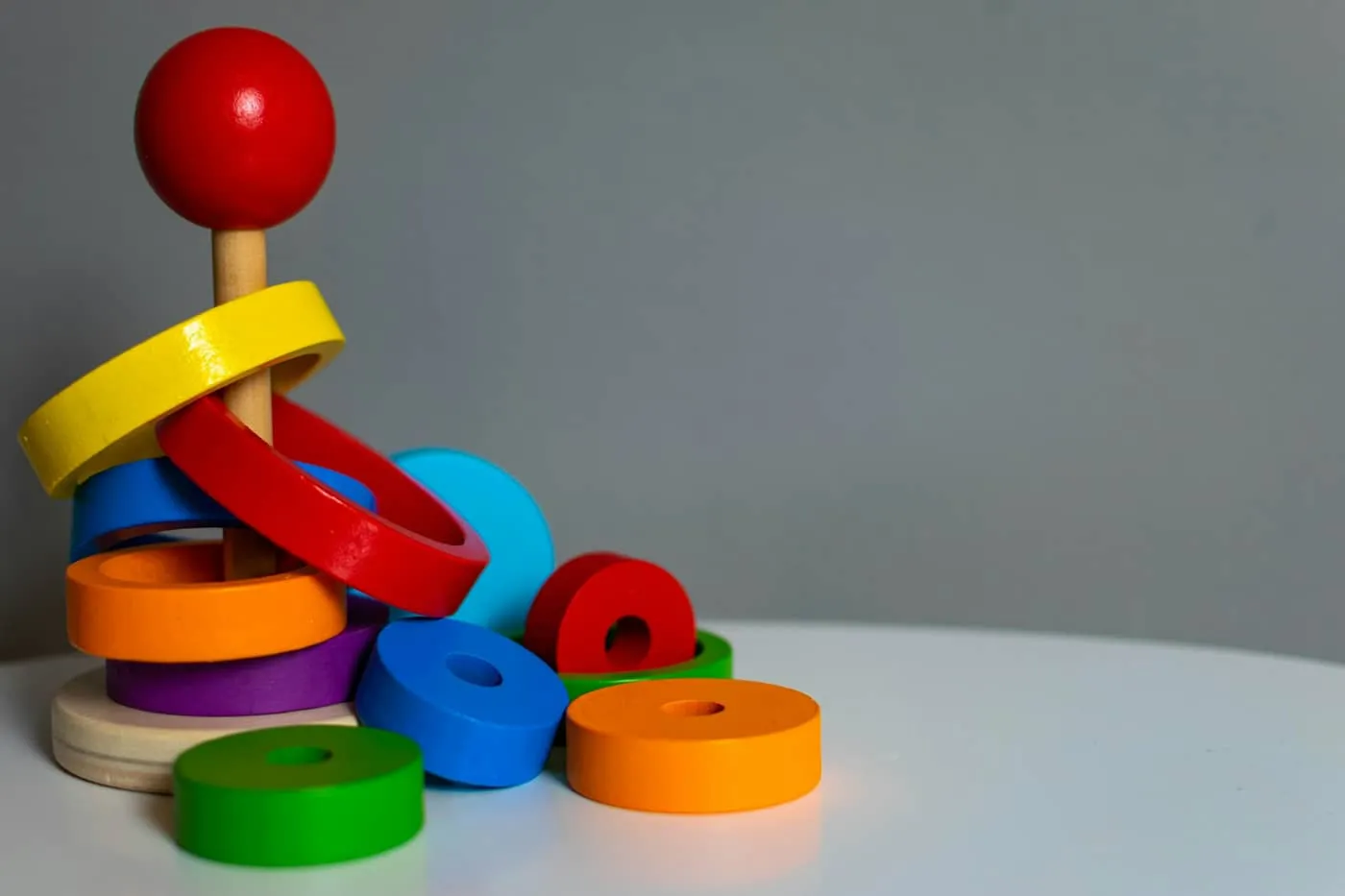
An open-ended toy grows with the child. The same rainbow stacker that a one-year-old nests and unnests becomes a bridge for cars at three and part of an elaborate marble run at six.
What children practise during open-ended play
- Imagination: deciding what something is and what happens next
- Problem solving: why does the tower keep falling over?
- Language: narrating, negotiating and explaining
- Persistence: trying again without anyone telling them to
- Cooperation: building something together with a sibling or friend
How to spot an open-ended toy
Ask yourself three questions in the shop:
- Could my child play with this in at least three different ways?
- Does my child do the work, or does the toy? If the toy flashes, talks and plays music by itself, your child becomes an audience.
- Will this still be interesting in two years?
If the answer to all three is yes, you have found a keeper.
Our favourite open-ended toys
Building blocks, rainbow stackers, plank sets, play silks, simple figures and loose parts (shells, pine cones, wooden rings) are all wonderful. None of them need batteries, and none of them tell a child what to do.
A note on screens and electronic toys
We are not against technology. But we notice that children in our workshops spend longer, and talk more, with simple materials. Electronic toys often set the pace; open-ended toys let the child set it.
The best advice we can give is to step back. Put out a few simple materials, resist the urge to show how they should be used, and see what happens.